Last updated November 21, 2026
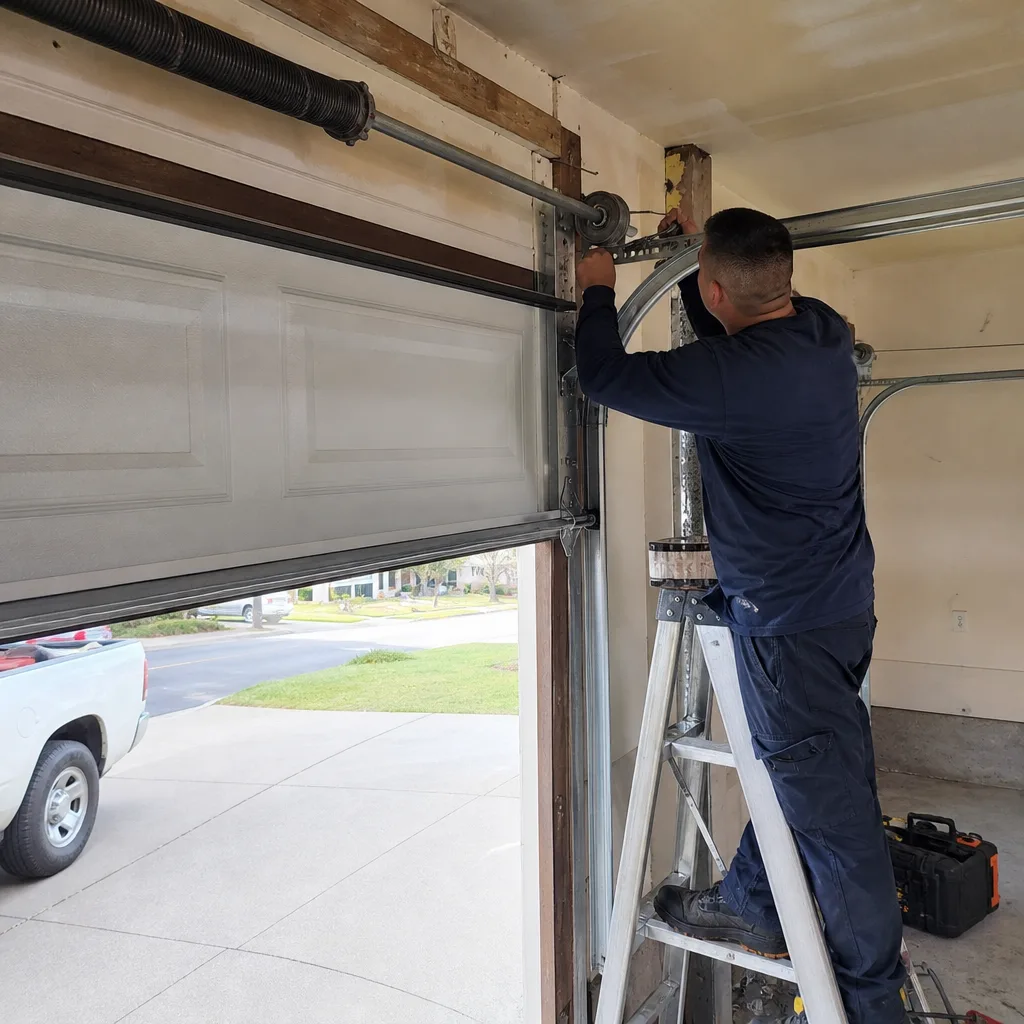
 Raised-panel steel
 Carriage house
 Modern flush
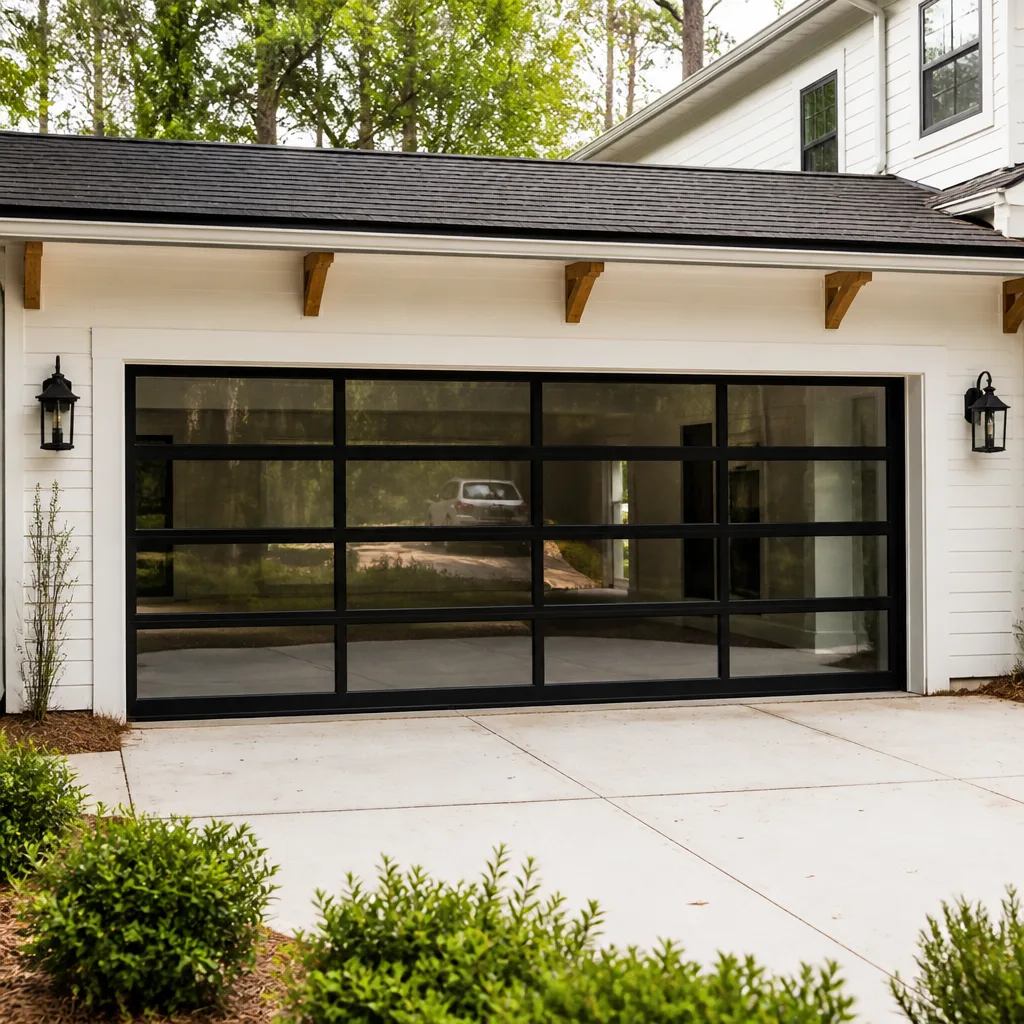 Full-view glass
 LiftMaster openers
 Chamberlain openers
Full 25-point door and opener safety check with every visit - springs, cables, rollers, tracks, and your LiftMaster or Chamberlain opener included
You get a price before we start. It does not change when the pro arrives.
Get your free estimateGarage Door Warning Signs: An Ashburn Homeowner’s Reference Guide
A grinding noise and a scraping noise coming from your garage door are not the same problem. They don’t share the same cause, and they don’t carry the same urgency. One might be a roller that needs lubrication. The other might be a torsion cable about to let go. Most warning-sign advice collapses both into “unusual noises” and tells you to call someone, which leaves you no smarter than before you started reading. This guide fixes that. We’re going to translate specific symptoms – sounds, visual cues, performance changes – into specific hardware diagnoses, so when you call a technician you can describe exactly what’s happening. That precision gets you a faster, more accurate repair in Ashburn and fewer parts swapped on guesswork.
Quick Answer
Garage door warning signs fall into three urgency tiers. Tier one (call today): a snapped spring, a fraying cable, a door that hangs crooked, or an opener that runs but won’t lift the door. Tier two (book within a week): grinding rollers, a door that reverses before closing, or an opener that strains. Tier three (schedule when convenient): a single noisy hinge, worn weather seal, or intermittent remote. Match the symptom to the tier before you call, and you’ll know whether you’re looking at an emergency or a routine visit.
Styles & brands we work with
- Raised-panel steel
- Carriage house
- Modern flush
- Full-view glass
- LiftMaster openers
- Chamberlain openers
Table of Contents
- What Your Garage Door’s Sounds Are Telling You
- Visual Warning Signs You Can Spot From the Driveway
- Performance Changes: When the Door “Works” But Doesn’t
- Which Signs Mean Days vs. Weeks
- How to Safely Assess a Partially Working Door
- Warning Signs Specific to Ashburn’s Older Door Systems
- What to Tell a Technician When You Call
- Common Mistakes to Avoid
What Your Garage Door’s Sounds Are Telling You
Sound is the earliest and most useful diagnostic signal a garage door gives you, but only if you can distinguish between them. Homeowners in Ashburn hear a noise, describe it as “weird,” and lose the detail that would have pointed straight to the cause. Here’s how to separate the common sounds by what produces them and how urgent each one is.
- Grinding, low and continuous: Almost always metal-on-metal friction from dry or worn rollers, or a torsion spring that’s lost its lubrication. Rarely urgent, usually a maintenance fix. If the grinding is accompanied by a shudder, suspect a bent track.
- Scraping, sharp and rhythmic: The door panel is rubbing against the track, often after a minor impact knocked one section out of alignment. Can wait a few days but shouldn’t be ignored – continued scraping accelerates panel wear.
- Squealing or squeaking: Hinges and rollers that need lubrication. The most benign sound on this list. Fix it yourself with a garage-door-specific lubricant, not WD-40.
- Popping or snapping, sudden and loud: This is a torsion spring failing. It’s the single most urgent sound a garage door makes. Stop using the door immediately and call for garage door repair.
- Rattling on the way down: Loose hardware – hinge bolts backing out, roller stems loose in their brackets. Not dangerous on its own, but rattling hardware loosens more hardware.
- Clicking that repeats without lifting: The opener is trying to engage but the drive isn’t catching. Could be a stripped gear, a broken coupler, or a dead logic board. This is an opener problem, not a door problem.
The pattern to internalize: continuous friction sounds (grinding, squealing) tend to be maintenance items. Sudden, one-time violent sounds (popping, snapping) tend to be failures. Rhythmic sounds tied to door travel (scraping, rattling) usually point to alignment or hardware.
Visual Warning Signs You Can Spot From the Driveway
You don’t need to climb a ladder or remove a cover to catch most serious garage door problems. A slow walk around the door, outdoors and with the door closed, tells you a lot. Here’s what to look for, in the order we’d check it.
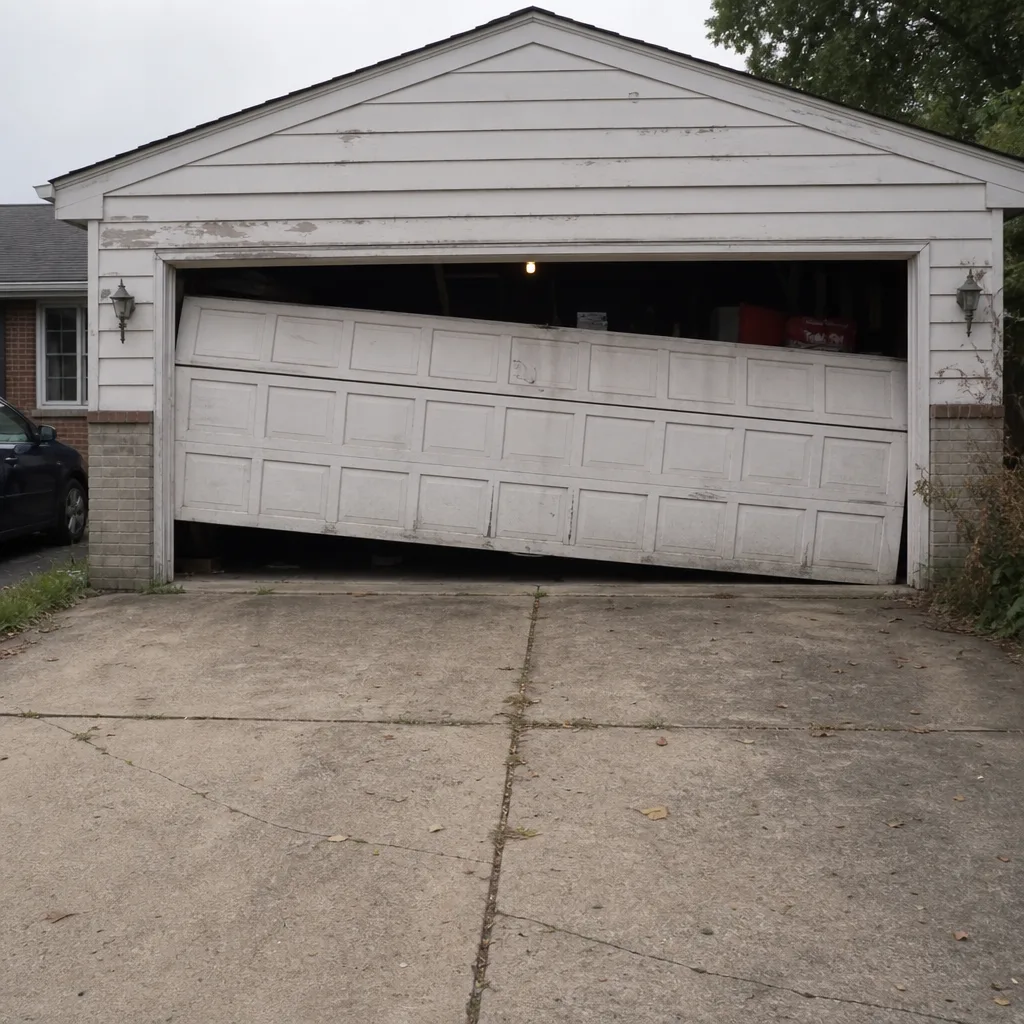
- The horizontal gaps. Close the door and look at the gap between the bottom of the door and the floor. It should be even across the whole width. A gap that’s wider on one side means the door is out of level – often a sign of one broken torsion spring in a pair, or a stretched cable.
- The panel line. Step back ten feet and sight along the horizontal lines between panels. They should be parallel. If one panel sags or the line is crooked, a panel is bent, a hinge is failing, or the track has shifted.
- The track edges. Look where the rollers ride inside the vertical track. Any shiny metal or metal shavings on the track means the roller is metal-on-metal or the roller has come out of the track. That’s a soon-to-fail condition.
- The cables. On a closed door, look at the two vertical cables that run from the bottom corners up to the drums. They should be uniformly wound with no fraying, no birdcaging, and no kinks. Do not touch them. A single broken strand means the cable is compromised and should be replaced by a trained technician.
- The springs. On a closed door, look at the torsion spring (or springs) above the door. Any visible gap in the coil – a clean break – means that spring is done. If you have two springs and one is broken, plan to replace the pair; running a single spring doubles its load and shortens its life.
- Weather seal edges. The rubber flap at the bottom should touch the floor along the entire width. A worn seal isn’t dangerous, but it lets in water, insects, and Ashburn’s summer humidity, which accelerates track and hinge corrosion.
Any of the above findings, with the exception of the weather seal, warrants a call. The good news is that a trained eye can confirm what’s going on within minutes.
Performance Changes: When the Door “Works” But Doesn’t
The most deceptive warning signs are the ones where the door still opens and closes, just not correctly. Those are the ones that fail at the worst moment – at 6 a.m. on the way to work, or worse, while someone is walking under the door. Here’s what each performance change usually points to.
- Door reverses before fully closing: This is either the safety sensors (blocked, misaligned, or dirty) or an opener limit switch that needs adjusting. Not dangerous, but it will keep happening until it’s diagnosed. Cleaning the sensor lenses often solves it in under a minute.
- Opener runs but door barely lifts or doesn’t move: Two possible causes. Either the opener drive is broken (gear, coupler, or limit) or the door’s own spring tension is gone. The door test below distinguishes them.
- Door closes too fast or slams: The spring has lost tension. The opener is no longer holding back the door’s weight; the door’s weight is pulling the opener. This is a spring problem, not an opener problem, and it’s a sign the spring is close to failing.
- Door lifts unevenly – one side higher than the other: A cable is stretched, frayed, or one of a matched spring pair has broken. Either way, the door is loaded asymmetrically, which stresses the tracks. Stop using it.
- Remote works only from up close: Battery, interference (LED bulbs and WiFi routers are common culprits), or a failing opener logic board. Try a fresh battery first, then a different remote, before you assume the opener itself is failing.
- Door stays open or keeps reversing on the way down: This is a safety reversal system hitting something it interprets as an obstruction – usually a misaligned photo-eye or a limit switch out of range. Doesn’t fail dangerously, but it does fail repeatedly.
One quick test separates opener problems from door problems. Pull the emergency release handle (the red cord) so the opener disconnects, then lift the door halfway by hand. If it stays there on its own, the springs are doing their job and the problem is the opener. If the door slams down or you can barely lift it, the springs are the issue.
Which Signs Mean Days vs. Weeks
The single most useful question homeowners ask us is: “Can this wait?” Here’s the honest breakdown. Some signs are emergencies. Some can sit. Most sit in between.
Call today – do not use the door
- A loud pop or snap from above the door, then inability to lift
- A visible gap in a torsion spring
- A hanging door, one side down, one side up
- A frayed or kinked cable
- A door that falls when you release it (spring broken)
- The opener runs but the door drops when you pull the release
These are all conditions where the door has lost its counterbalance or its lifting hardware is compromised. Using the door in this state can bend panels, snap cables, or damage the opener. Don’t test fate – a snapped spring can be a same-day fix. Call for spring repair the moment you notice one.
Book within a week
- Grinding that wasn’t there two weeks ago
- Door reverses intermittently on the way down
- Opener strains audibly when lifting
- Door travels unevenly by even an inch
- Remote control range has dropped dramatically
These point to early-stage failure. A grinding roller, if left alone, will score the track. A straining opener, if left alone, will burn out its motor. A week is fine, a month is not.
Schedule when convenient
- Single squeaky hinge or roller
- Weather seal worn or cracked
- Remote needs a fresh battery
- Interior lights on the opener flicker
None of these are failing. They’re declining. Address them when you can, and they won’t turn into the first list.
How to Safely Assess a Partially Working Door
The instinct when a door misbehaves is to walk under it, walk beside it, prop it up, or reach up to check something. Please don’t. A garage door is a counterbalanced system that puts hundreds of pounds of stored tension into components you can’t see – springs, cables, drums, and hinges under load. Here’s how to assess a partially working door without putting yourself in the door’s load path.
- Stay outside the door’s travel path. That means not standing under the door, not standing on the threshold, and not standing between the door and the wall. Stand to the side, at least two feet from the door’s track.
- Use the remote, not the wall button. Standing at the wall button puts you under the opener arm. Stand where you can see the door from a distance and press the remote there.
- Watch the door, don’t chase it. Observe the full cycle from a distance. Watch for uneven lift, uneven travel, a stall point, or a panel that flexes or bows under load.
- Don’t manually lift a stuck door. If the door won’t lift on its own, the release is an option – but only if you can hold the door’s weight. If it’s heavy enough to be a concern, it’s heavy enough to hurt.
- Never touch a spring or cable. Torsion springs and cables are under constant load. There’s no safe way for a homeowner to inspect them up close. You can look at them; you cannot touch them.
- Photograph the visible components. From a safe distance, take photos of the springs, the cables, the tracks, the photo-eye sensors, and the opener unit. Photos help the technician on the phone triage the issue and can identify your opener brand before we arrive.
If, at any point, the door makes a loud snap while you’re observing it, step back and stop testing. The system is in a failure state and every actuation risks the panel or the person.
Warning Signs Specific to Ashburn’s Older Door Systems
Ashburn’s housing stock has a large share of doors from the late 1990s and early 2000s, when builder-installed garage doors were typically steel-panel doors on torsion springs with opener units from LiftMaster or Chamberlain. Those doors have good bones, but they’re now in a specific failure window: springs at the end of their rated cycle life, opener logic boards beginning to lose sensitivity, and original photo-eye sensors that predate modern safety standards. Here’s what to look for specifically on older Ashburn doors.
- Torsion springs that have cycled out. A residential torsion spring is commonly rated for 10,000 cycles or so, and a door that opens and closes four times a day reaches that in under seven years. On a 1990s-era door, the springs have likely been replaced at least once – if they haven’t, and the door lived through the 2000s, they’re on borrowed time. Ask any technician to check the cycle rating on the replacement.
- Older photo-eye sensors that fail intermittently. The early-generation safety sensors on 1990s openers were less robust than today’s models. If you have to tap the sensor or wipe the lens to close the door, the sensor assembly is failing.
- Original opener logic that won’t accept new remotes. Older LiftMaster and Chamberlain openers eventually stop accepting remote programming. Homeowners often buy a new remote, discover it won’t pair, and conclude the opener is dead. Usually, it’s the logic board. That’s fixable with garage door opener repair.
- Undersized springs combined with heavier panels. Some builder-grade doors were put in with springs sized to the lightest panel option. If your door has glass panels or a heavier insulated panel from a later replacement, the springs may be undersized for the actual load. That door will strain, and eventually the springs will break early.
- Dry or hard weather seals on every edge. On a door that’s sat through a dozen Ashburn summers, the bottom seal and the perimeter seals turn brittle. That’s not a safety issue, but it does accelerate rust on hinges and track.
- Doors from brands like Raynor and Genie that need brand-specific parts. When those doors fail, aftermarket parts don’t always fit. We work on the brand already in your garage, so a 1990s Raynor stays a Raynor rather than getting hacked into fitting a generic roller assembly. Same goes for a late-1990s Genie opener that needs a specific replacement part.
If you’re in Broadlands, Ashburn Farm, or any of the neighborhoods where the original door is still in place, it’s worth having a technician look at the springs and opener once – not to sell you anything, but so you know how much life is left on each component.
What to Tell a Technician When You Call
The single biggest thing you can do to speed up your repair is to describe what you’re hearing and seeing before the technician arrives. A vague call means the technician walks in cold and diagnoses from scratch. A precise call means the technician walks in with a probable diagnosis and the right parts on hand, often the same visit. Here’s exactly what we want to know when you call.
- The sound. “Grinding” vs. “scraping” vs. “squealing” vs. “popping” vs. “clicking” – use the specific word. If it’s one of those, say which.
- When it happens. Going up, coming down, at the very start, at the very end, halfway, or all the time.
- What the door does. Does it still lift? Fully, or partway? Does it reverse? Does it drop?
- What the opener does. Does the opener run and nothing happens? Does it click and stop? Does it respond to the wall button but not the remote?
- The brand and approximate age. LiftMaster, Chamberlain, Genie, Clopay, Amarr, Wayne Dalton, Craftsman, Raynor – if you know the brand, tell us. If you don’t, a photo of the opener’s label is enough.
- Anything you’ve already tried. Changed the remote battery, cleaned the sensors, lubricated the hinges – it’s all useful. Even “I tried WD-40” is helpful to know, since the wrong lubricant attracts dust.
- The last time it worked normally. Yesterday, a week ago, after the storm a month back – this narrows down whether it’s a slow wear failure or a sudden event.
That’s the entire call. Two minutes on the phone with us translates to a faster diagnosis on-site. If you can take photos, even better – text them to us when you call and we can often confirm the parts needed before we arrive. Parts on hand, not on order, is the fastest path to back to working the same day.
Common Mistakes to Avoid
- Trying to force a stuck door up by hand. If the springs are broken, the door weighs far more than you can safely hold. Injuries from dropping garage doors are entirely preventable. Call for garage door repair Ashburn instead.
- Spraying WD-40 on hinges, rollers, and springs. WD-40 is a solvent, not a lubricant. It strips the original grease and dries out, which accelerates wear. Use a garage-door-specific white lithium or silicone lubricant, and only on the components a technician has confirmed are safe to lubricate.
- Replacing one spring of a matched pair. If you have two torsion springs and one fails, the second is on the same cycle count and will fail within weeks. Replacing one spring means paying the repair cost twice. Replace the pair.
- Ignoring a door that reverses intermittently. A door that reverses “sometimes” is usually a failing safety sensor. That’s a safety system failing, not a nuisance. Have it checked before it fails closed on something, or someone.
- Assuming the opener is the problem. When a door stops lifting, many homeowners call for opener repair. More often, the opener is fine and the springs have failed. Describing the symptom over the phone – “the opener runs but the door doesn’t move” vs. “the opener clicks and does nothing” – saves a wrong-visit diagnosis.
- Hiring a general handyman to replace a torsion spring. Torsion springs are the highest-risk component in a garage door system. This is a job for a dedicated garage door specialist, not a mult-trade contractor adding it to the schedule. Garage doors are our only trade.
- Using the door after a visible spring break. A door with a broken spring is unbalanced. Every use stresses the panels, the tracks, the cables, and the opener. A door that could have been fixed with one spring repair can need a panel or a whole new door after a week of “just using it anyway.”
See the difference
 Before
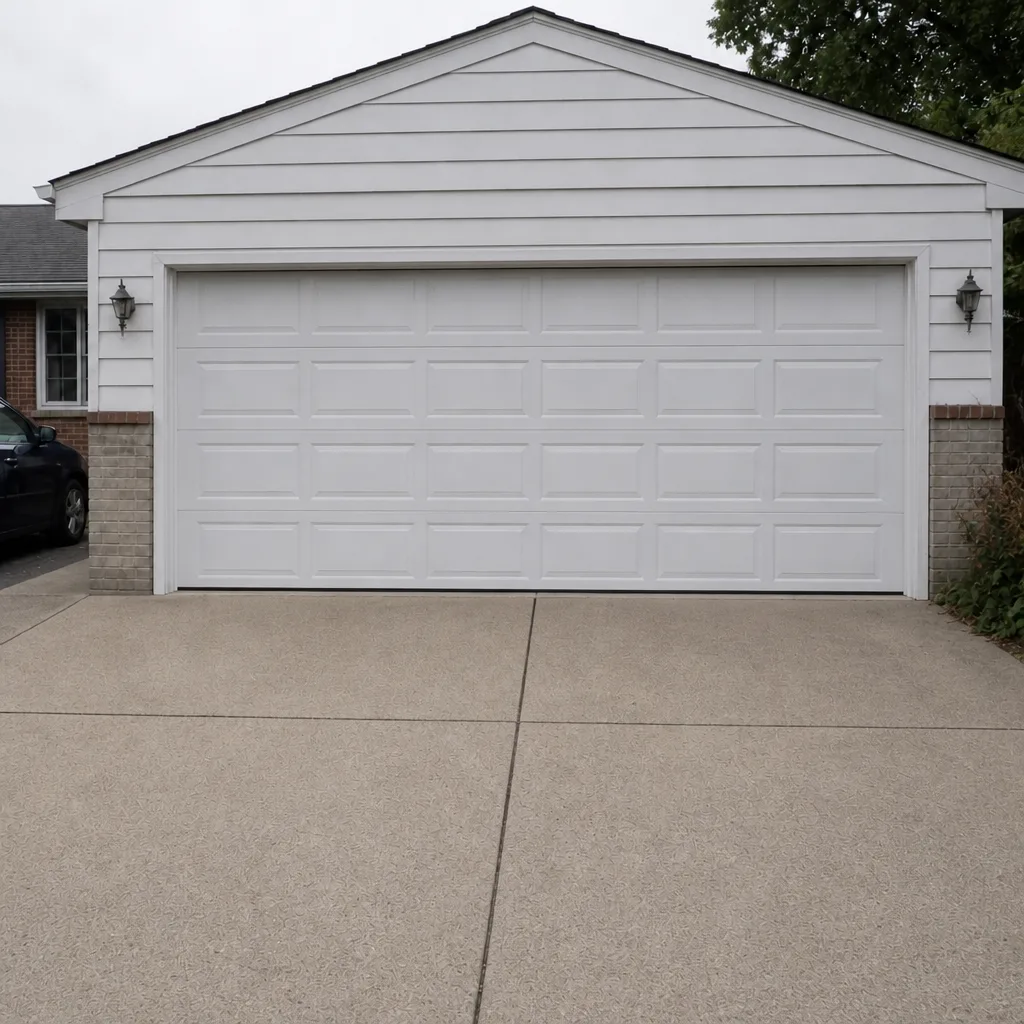 After
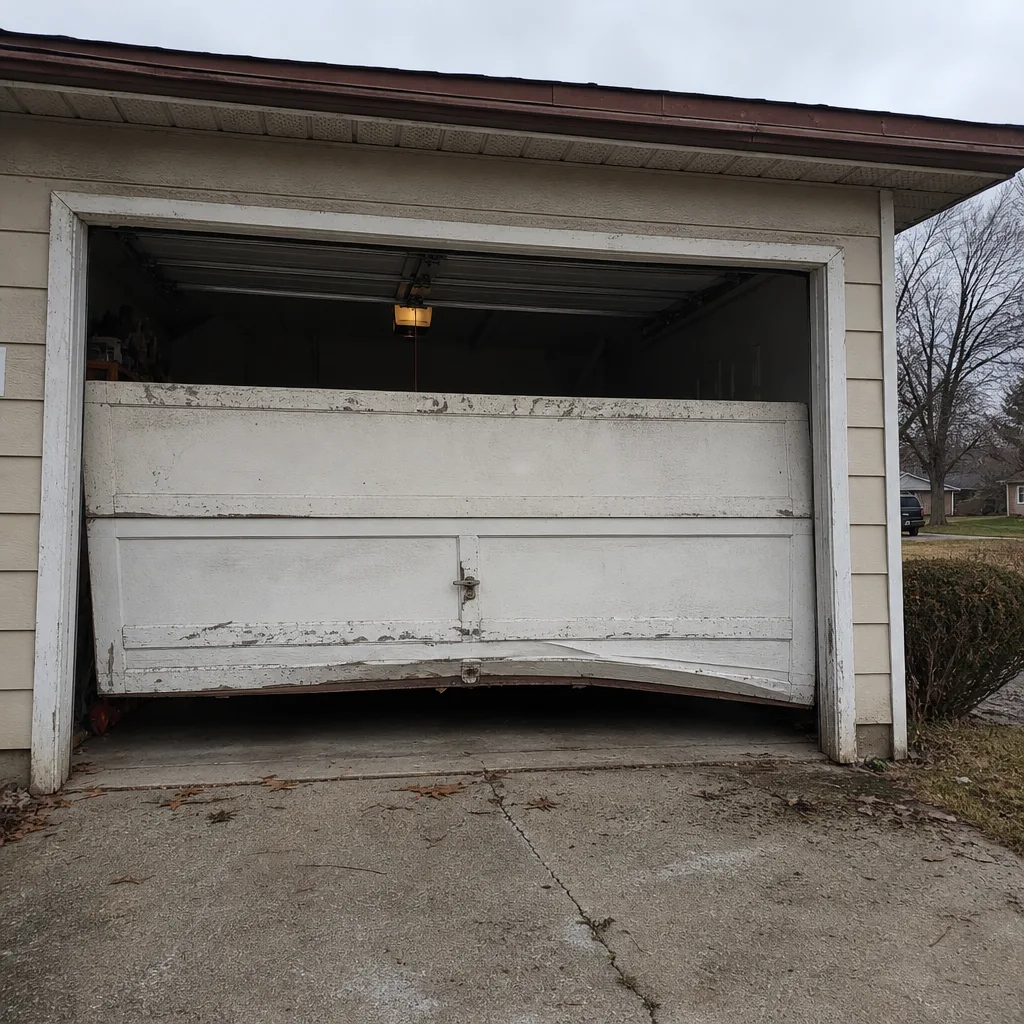 Before
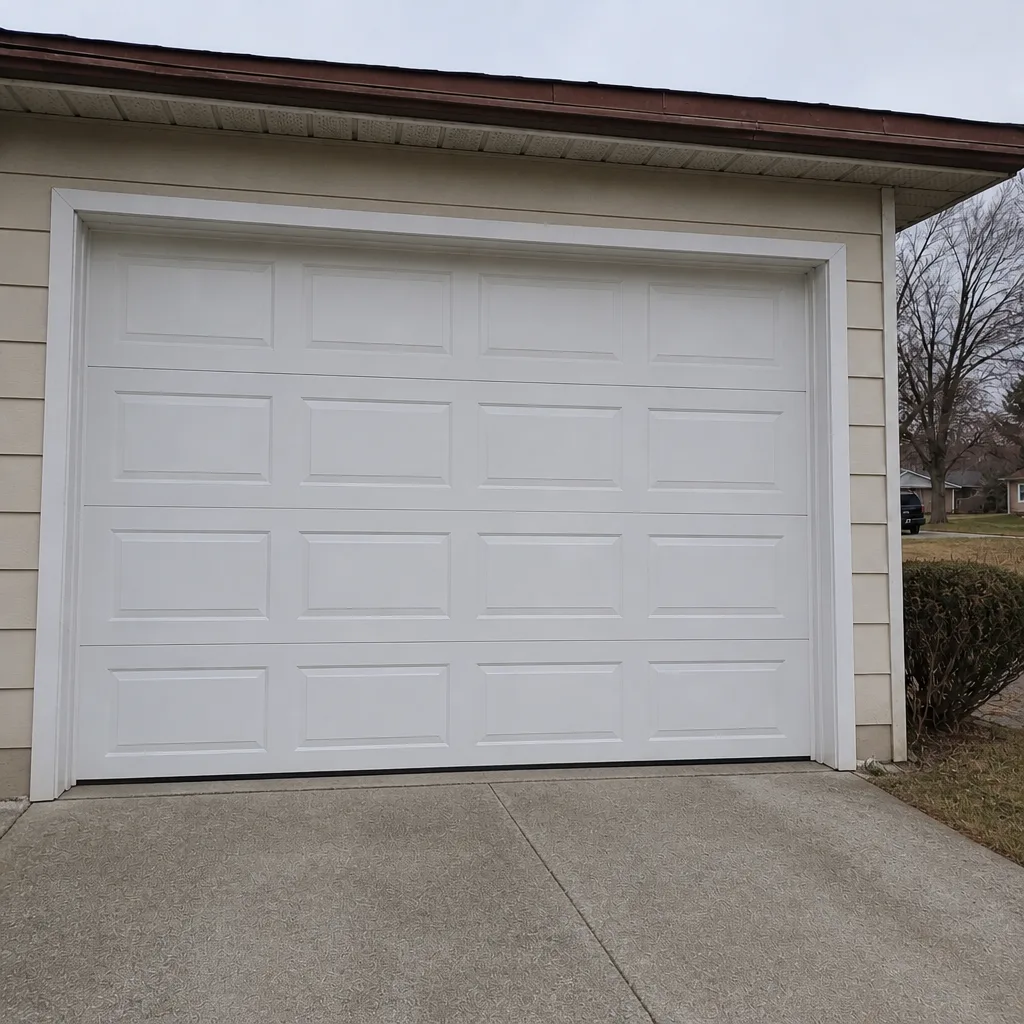 After
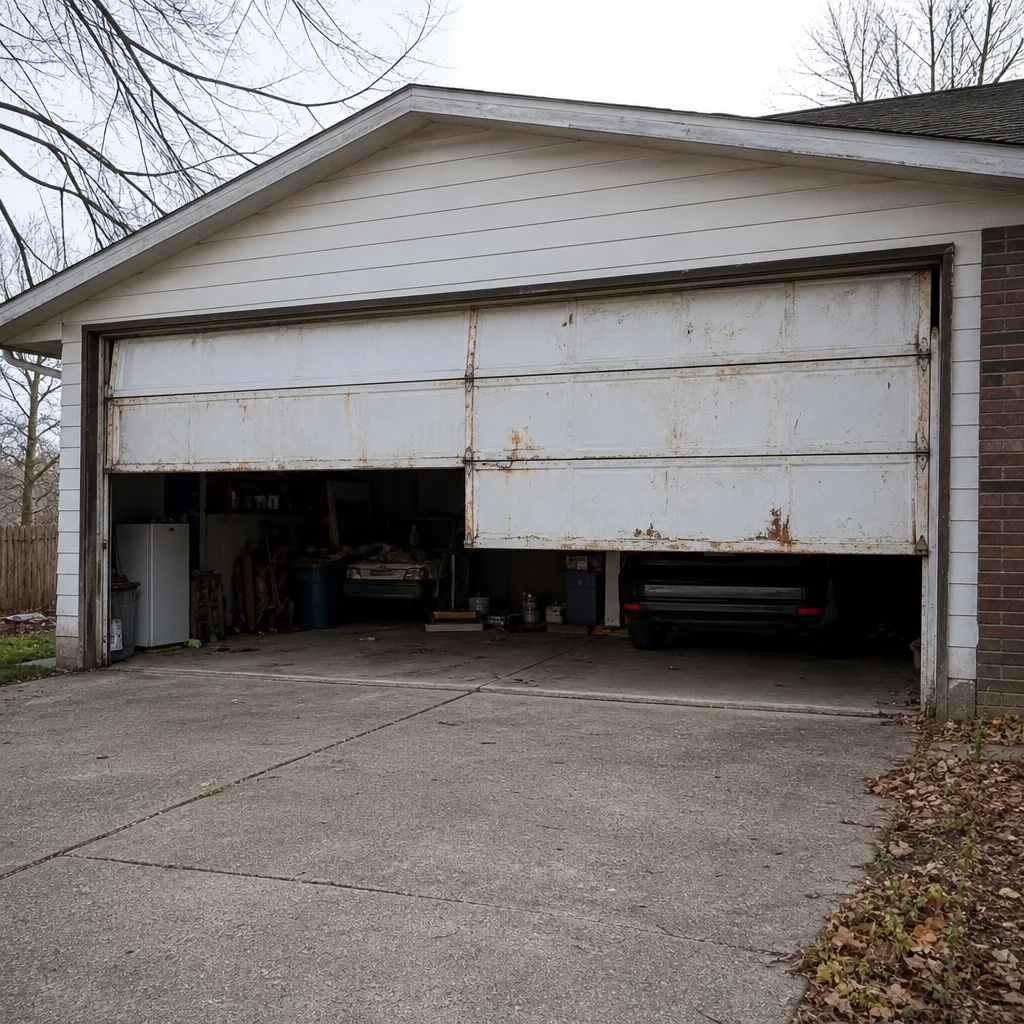 Before
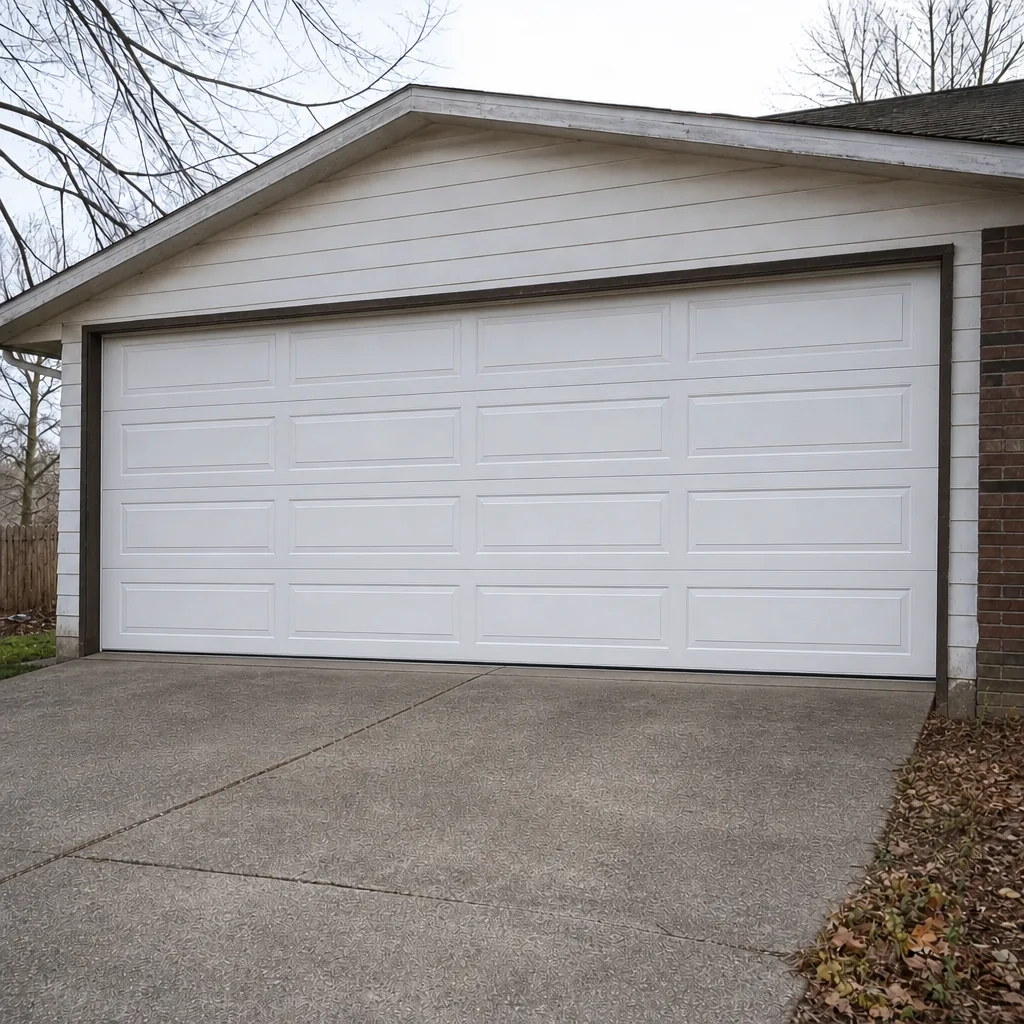 After
When to Call a Professional
Any warning sign in the “call today” tier above is a call today. That means a snapped spring, a hanging or crooked door, a frayed cable, or a door that won’t hold its own weight. If you’re not sure which tier you’re in, describe the symptom and let us tell you. Garage Door Repair Ashburn offers free estimates in Ashburn – call (855) 337-1294. We cover repair, spring replacement, opener repair, full garage door installation, and parts for the eight leading residential brands, which means we’re familiar with the system already in your garage. Our technicians have up to 10 years of experience, and none of them will quote you a price over the phone that changes once they see the door. The written estimate sets the price before any work starts.
Frequently Asked Questions
The most urgent signs are a snapped torsion spring (loud pop, then a door that won’t lift), a crooked or hanging door, a frayed or kinked cable, and a door that falls when the opener is released. All four mean the door has lost its counterbalance or its lifting hardware is compromised. Stop using the door and call (855) 337-1294 for an exact quote – estimates are free.
Pull the emergency release cord to disconnect the opener, then try to lift the door halfway by hand. If it holds its position, the springs are working and the opener is the issue. If it slams down or you can barely lift it, the spring is broken. Describe which one happened when you call and we’ll arrive with the right parts.
Not usually. Squealing, mild grinding, and rattling are typically maintenance issues – dry rollers, loose hinges, or worn lubrication – and can be scheduled within a week. Sudden loud popping or a sharp rhythmic scraping are different. Those indicate spring failure or track damage and warrant a same-week call.
Springs that have cycled out (they typically last 10,000 cycles), intermittent photo-eye sensors, and opener logic boards that stop accepting new remotes. Those are the three most common failures on 1990s-era Ashburn doors. A single diagnostic visit tells you how much life is left on each component.
No. Torsion springs are under hundreds of pounds of stored tension and cause serious injuries to homeowners who attempt to replace them without training. This is the single most dangerous part of a garage door system. A broken spring calls for a trained technician with the right tools, and it’s a same-day repair at Garage Door Repair Ashburn. Call (855) 337-1294 for an exact quote.
No. Our price is quoted and agreed before any work starts. The written estimate you receive on-site is the number you pay unless you approve an additional repair we discuss with you beforehand. If you’re comparing quotes, ask every company whether their estimate is written and agreed up front – it’s the right question to ask.
We work on the brand already in your garage – LiftMaster, Chamberlain, Genie, Clopay, Amarr, Wayne Dalton, Craftsman, and Raynor. If your door uses a model from one of those, we’re familiar with the exact system. If you’re unsure of the brand, a photo of the opener’s label or the door’s hinges is all we need.
The Bottom Line
Garage door warning signs are only useful if you can name them. “Unusual noise” tells a technician nothing – “a popping sound and the door won’t lift” tells us exactly which part has failed. Read your door’s sounds, watch its travel, check its line from the driveway, and don’t put yourself in its path. If it’s a Tier 1 sign – snap, hang, fray, drop – it’s a call today. If it’s Tier 2, book within a week. If it’s Tier 3, schedule when convenient and you’ll get ahead of the failure. The overall goal is a garage door that works quietly, moves evenly, and never surprises you. If that door is in Ashburn, we’re set up to help with any of the eight leading brands, from exploded spring to full garage door installation. Call (855) 337-1294 for a free estimate.
Written by the team at Garage Door Repair Ashburn.